









 立即联系
立即联系


A QC laboratory in a steel plant does not face just one analytical challenge. It faces several, and often faces them simultaneously. Irrespective of whether the plant is focused on carbon steels, stainless steels or structural steels, the spectrometer must analyse and certify the concentrations of a host of elements across very different ranges. In stainless steel plants, for example, the nickel content could span from 5 to 45% across heats. Nitrogen may range from single-ppm values in a clean steel to over half a percent in a hyper duplex steel. Carbon, sulphur, phosphorus, manganese, vanadium, boron, niobium and about a dozen other elements must all be measured to within very small tolerances, as each could individually change the grade.
And then there is oxygen, which may not be part of the grade specification but could lead to the heat failing mechanical tests. All this must be achieved while operating at a very high productivity level, demanding that the unit requires minimal maintenance, checking or recalibration.
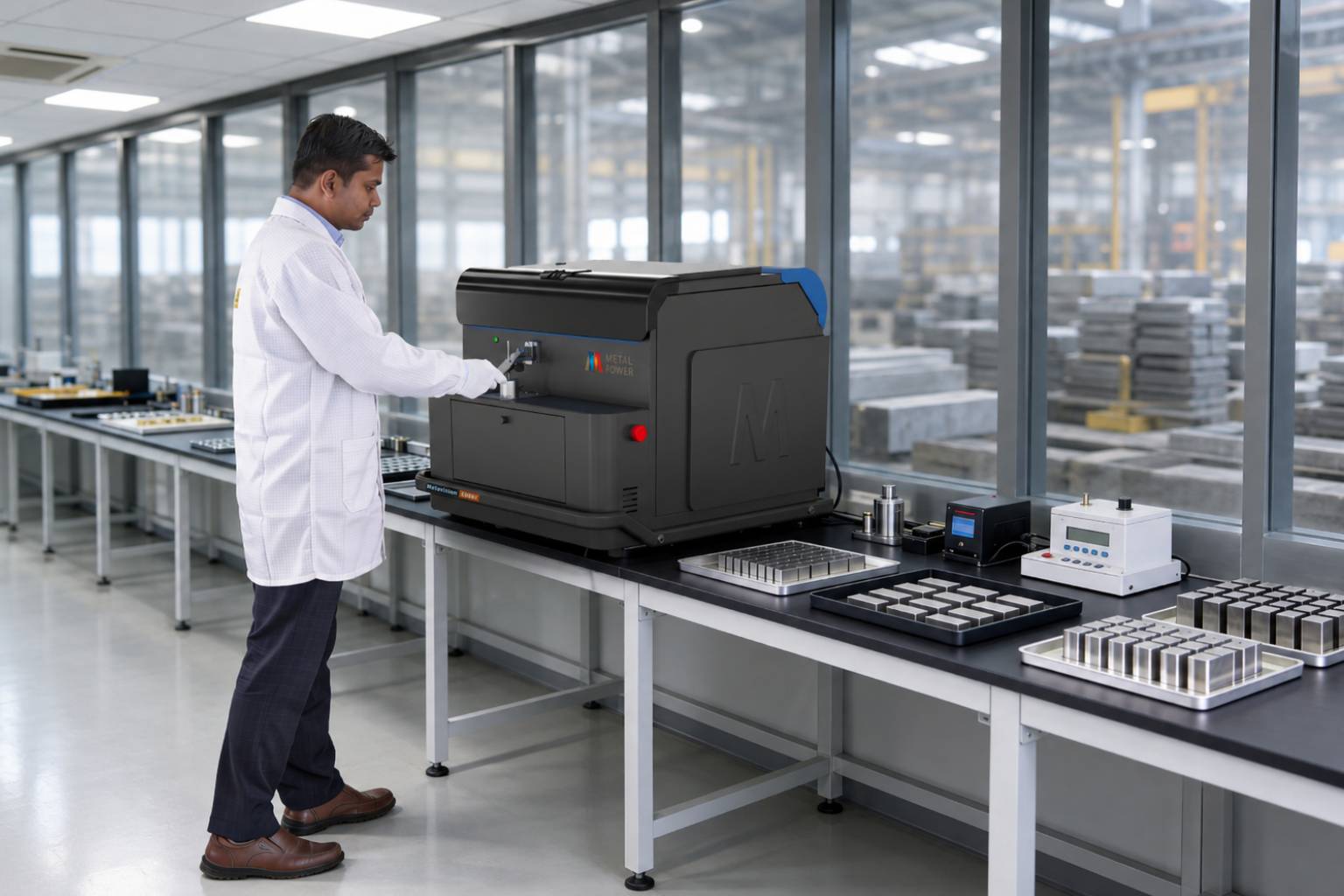
This is the practical and daily reality of production and QC in steel plants. That is why it is also the environment the Metavision-1008i3 was engineered to excel in. Not as a specialised instrument for one application, but as the centrepiece of a steel melt shop (SMS) laboratory that handles multiple steel grades and multiple shifts operating round the clock, with certification requirements that meet the most stringent standards.
This article focuses on what that means technically: the significance of oxygen measurement in steels, and why the instrument’s hardware architecture is what makes the analytical performance sustainable rather than theoretical.
Oxygen in Steel: The Element Whose Absence Defines Quality
The presence of carbon, manganese, and silicon in finished steel is deliberate and controlled. The presence of oxygen is not. Oxygen is the guest that has overstayed in a steel melt. It is introduced deliberately during the Basic Oxygen Process (BOP) and also picked up from the atmosphere. From that point on, deoxidation becomes crucial, and minimising oxygen content prior to solidification defines whether the final product will perform as required or fail in service.
The mechanisms by which oxygen damages steel are well established. Dissolved oxygen reacts preferentially with strong deoxidisers, particularly aluminium, silicon, and manganese, forming oxide inclusions during solidification. These inclusions, if present at sufficient size and density, act as stress concentrators in the solid steel, reducing fatigue life, lowering impact toughness, and causing surface defects in cold-formed and deep-drawn products.
The distinction between soluble and total oxygen matters analytically. Soluble (or dissolved) oxygen exists in the melt as individual atoms in the iron lattice. Total oxygen includes both dissolved oxygen and the oxygen already bound in oxide phases formed during deoxidation. In the melt shop, total oxygen measurement guides the deoxidation practice and the timing of aluminium additions. In the finished product, total oxygen content determines whether the steel meets the cleanliness requirements for its end application.
Automotive deep-drawing grades require total oxygen below 20 ppm to avoid surface crack initiation during forming.
Pipeline grades to API 5L X65 and above carry implicit cleanliness requirements that correlate directly with low total oxygen.
Each of these specifications requires an instrument capable of reliably measuring oxygen at low single-digit ppm levels in a production laboratory environment.
Why oxygen measurement in OES is architecturally demanding
The O(I) emission line used in spark OES sits at 130.22 nm, even deeper in the ultraviolet than nitrogen (149.26 nm) or carbon (193.09 nm), both of which were covered in the preceding article in this series. At 130 nm, even trace concentrations of atmospheric oxygen or moisture and even hydrocarbons in the optical path absorb the analyte signal before it reaches the detector.
The Metavision-1008i3‘s hermetically sealed, Peltier-cooled optics address this by maintaining an exceptionally pure and inert argon atmosphere within the deep ultraviolet (DUV) optical chamber, with exceptionally tight control over both temperature and pressure. The multi-stage argon repurification system ensures that the argon inside this chamber is held at the highest possible purity through constant repurification, a level that purged optics are incapable of meeting. This is not a modification or an upgrade option; it is standard architecture on the instrument.
The practical consequence is that oxygen is measured as routinely as any other element, without a separate gas analyser, without additional sample preparation, and without interrupting the production analysis sequence. Oxygen is quantifiable to 0.001% (10 ppm) in steel matrices (as also in copper, nickel and titanium matrices).
The Holy Trinity: Accuracy, Precision, and Stability
Once one accounts for the elemental coverage and analytical ranges of each element, the real test of an OES comes down to three crucial aspects. This holy trinity that defines an OES model’s quality is accuracy, precision, and stability.
Accuracy and precision are point-in-time measurements. They call for exceptional calibration skill and for detailed and precise algorithms to address inter-element interferences and matrix effects. Establishing these two is a simple and short test, easily accomplished using a few standard samples, and between them, they are crucial to establishing the quality of the unit to deliver reliable point-in-time results.
Stability, on the other hand, is what defines the ability of the unit to deliver that accuracy and precision over an extended period of use without the need for any maintenance or corrective action. It defines how well the unit holds performance over a shift and across multiple shifts, provided usage conditions do not change. Even a unit that clears accuracy and precision tests with flying colours will prove unusable if it does not stay stable over a long period of operation. For steel plants, and particularly for steel melt shops, a unit must remain exceptionally stable over at least a single shift, if not longer.
The Metavision-1008i3‘s architecture is designed to excel at holding stability over extended periods of time. The hermetically sealed dual optics are not simply sealed to prevent leakage or ingress of contaminants. They are engineered to maintain an extremely stable temperature and pressure environment within the optical path using Peltier cooling, which actively counteracts thermal effects with high resolution. The pneumatics system, and even the form and placement of the inlet and outlet paths, are designed to eliminate whorls, pockets or disruptions, maintaining a consistently flat gradient across the entire optical system. The result is that the instrument’s spectral span and signal intensity remain consistent through extended periods of time.
The multi-stage argon repurification system also plays a critical role in ensuring stability by maintaining a consistently ultra-pure and DUV-transparent environment inside the optical chamber. Purged optics systems are prone to changes in the purity of argon within the optical path, since argon purity varies even across a single cylinder, let alone across cylinders. By sealing the argon inside the optical path and constantly removing residual impurities from the input argon through multi-stage repurification, the Metavision-1008i3‘s design does more than maintain the DUV-transparent atmosphere that carbon, nitrogen, and oxygen measurement depends on. It also delivers far longer periods of stability, a significant reduction in argon consumption compared to purged optics, and limits argon-quality effects to those arising within the spark chamber alone, which can be addressed through external argon purifiers.
SmartSTD single-sample restandardisation completes the picture: any drift accumulated over an extended period of time is corrected in under five minutes, with minimal operational disruption or operator intervention.
And one last thing: About those inclusions…
So, you now have an OES that provides exceptional stability, accuracy and precision – and also provides you with extremely accurate and low-ppm Oxygen analysis. Could you want more? If you’re really demanding (and you should really be, if you run a steel mill), you’d like to know about the soluble-insoluble ratio of aluminium, boron, titanium and calcium – all of which can exist in acid-soluble or acid-insoluble forms in steel. The higher the acid-insoluble content, the higher the risk of large inclusions that can negatively affect the surface quality and toughness of billets – eventually resulting in a failure of metallurgical/mechanical tests and/or customer rejections.
The Metavision-1008i3 addresses this critical requirement as well, offering soluble-insoluble analysis as part of its feature set for steel plants.
Placing the Instrument in the Metal Power Analytical Range
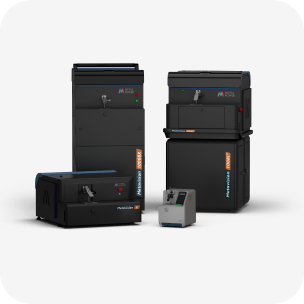
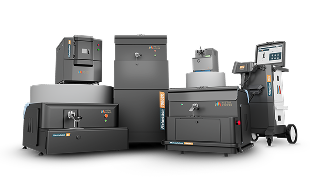
The Metal Power Analytical stationary range spans multiple models, and the differences between them are real. For a steel plant, the comparison that matters is in the Fe base: elemental coverage, accuracy, precision, stability, and the detection limits for the elements that decide steel quality, particularly oxygen, sulphur, nitrogen, and phosphorus.
Metavision-10008X
The flagship. This is the instrument for central laboratories, steel melt shops, multi-material R&D facilities, and producers requiring ultra-low detection limits and maximum spectral resolution, with the highest expectations from all of accuracy, precision and stability. In the steel base, oxygen, sulphur, nitrogen, and phosphorus are each quantifiable to 0.0001% (1 ppm). If your primary requirement is pushing every performance parameter to its absolute zenith, the Metavision-10008X is the answer.
Metavision-1008i3
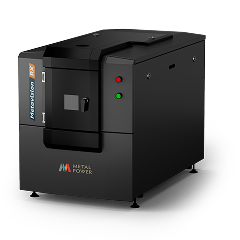
The production laboratory instrument for mid-to-large steel producers. In the steel base: 33 elements across 14 alloy programs, with oxygen to 0.001% (10 ppm), nitrogen to 0.0008% (8 ppm), and sulphur and phosphorus each to 0.0005% (5 ppm). Engineered for 24/7 operation with the sealed-optics stability architecture described above. The instrument for laboratories where breadth of coverage and operational endurance take precedence over pushing detection limits to their absolute floor.
Metavision-8i
The right-sized stationary OES for small and mid-size steel plants, component makers, forging units, and rolling mills. In the steel base: nitrogen to 0.002% (20 ppm), sulphur to 0.001% (10 ppm), and phosphorus to 0.0015% (15 ppm). It also carries unique alloy programs not available elsewhere in the range, specifically the stainless steel welding wire programme and the Fe-Ni master alloy programme, making it a strong choice for welding consumable manufacturers.
Furthermore, SmartSTD single-sample restandardisation is standard across the Metavision range of spectrometers by Metal Power Analytical, enabling virtually no downtime for laboratories across the globe.
What This Means for Your Laboratory Decision
Instrument selection in a production environment is not a specification exercise. It is an operational one. The questions that determine the right choice are not which instrument has the lowest published detection limit, but rather: which elements do you need to certify, at what throughput, and under what operational conditions?
For a steel laboratory that measures carbon, nitrogen, sulphur, phosphorus, and oxygen as routine elements, i.e. handles stainless, low-alloy, and tool steel grades, and requires certified results under ASTM E415 and EN 10001 without interruption, the Metavision-1008i3 is the instrument that covers that ground. Not by approximation, but by design. Where every performance parameter must sit at its absolute zenith, and you desire absolutely no trade-offs, the Metavision-10008X is the undeniable step up. Suffice it to say that the Metavision-10008X will accommodate every analytical requirement your laboratory might have and never miss out on accuracy or precision in results, regardless of concentration levels.
About Author


 On this page

