








 Contacte con nosotros


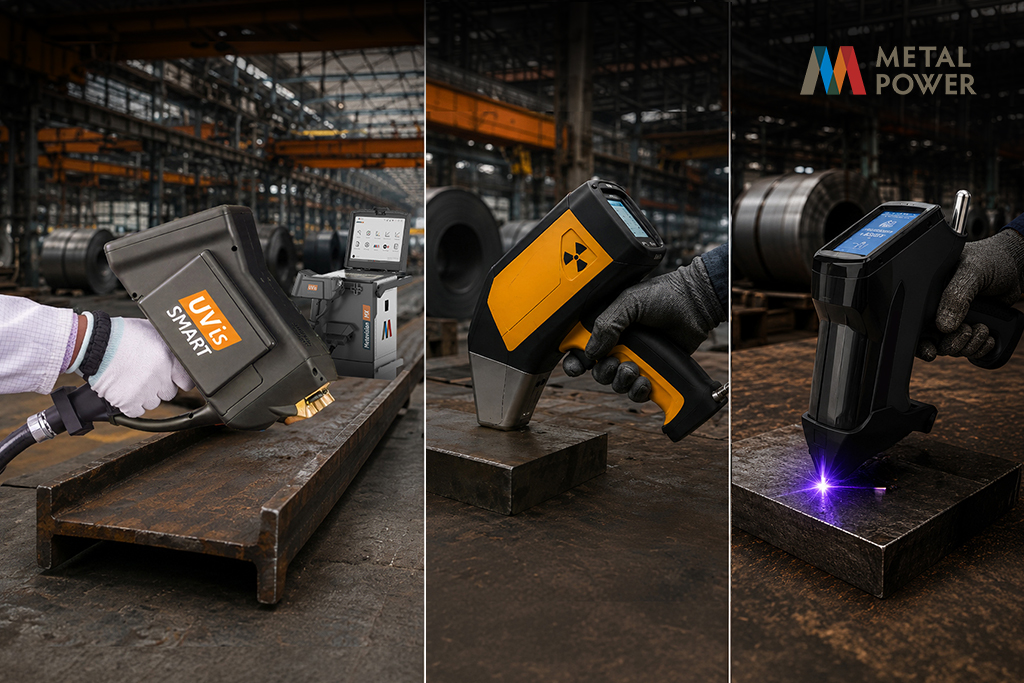
Let’s face it, not every metal analysis question starts in a laboratory. In fabrication shops, scrap yards, warehouses, storage godowns, on-site at construction or maintenance projects, or at sites of accidents that demand failure analysis, the question is simpler but no less critical: What is this material, and/or is it what it is supposed to be?
Positive material identification (PMI) and field metal analysis are the disciplines that answer this question when the sample cannot travel to the laboratory. The instruments used for this work, handheld XRF, handheld LIBS, and mobile OES, each approach the same problem from different angles (no pun intended), and with their own distinct advantages as well as specific limitations.
This article explains what those differences mean in practice, with particular focus on the scenarios where a handheld instrument reaches its analytical boundary and where a mobile OES like the Metavision-MX+ closes the gap. The underlying laboratory standard for reliable and certifiable analysis, stationary spark OES, is also referenced throughout, because understanding the relationship between field and laboratory methods is central to making the right instrument choice.
What Field Metal Analysis Actually Involves
PMI and field metal analysis cover a range of distinct tasks, each with a different analytical requirement. Being clear about which question you are actually asking comes before any instrument decision, so the tasks are described here on their own terms.
Grade family identification. Is this stainless steel or carbon steel? Is it austenitic or duplex? For example, chromium above 10.5% indicates stainless, and the ratio of nickel to chromium separates austenitic from ferritic, and so on. These are large compositional differences that any calibrated field instrument can resolve.
Specification-level grade verification. Is this 316? Is this 304? At this level, chromium, nickel, and molybdenum must be read accurately enough to place the material within the ranges defined by the relevant standard. The elements involved are mid-to-heavy atomic mass, well within the reliable range of handheld XRF, which is the most frequently used tool for this task.
L-grade and carbon-critical separation. Is this 316 or 316L? Is this 304 or 304L? The only difference between a standard grade and its L variant is carbon content. At 0.03% maximum for the L grade versus 0.08% maximum for the standard grade, the distinction requires reliable carbon measurement at the sub-0.1% level, on-site. Neither handheld XRF nor handheld LIBS resolves this reliably, which points to mobile OES with a UVis Smart probe as the only field instrument that answers the question with confidence.
Incoming material inspection at the scrap gate. What alloy family is this scrap? Does it contain elevated copper, tin, or nickel that will affect the melt? Speed matters more than anything else here, though the L-grade question can arise too: a parcel claimed to be 316L is only worth 316L money if its carbon content says so.
Asset inspection and weld verification. Is this pipe fitting the correct grade for service? Is this weld bead composition within specification? Note that some questions in this category, such as coating thickness or oxidation depth, are not elemental composition questions at all: XRF can measure coating thickness, whereas OES cannot gauge coatings, oxidation, or depth.
What Each Field Instrument Can and Cannot Do
Handheld XRF: reliable, fast, and limited to elements above sodium
Handheld XRF is the most widely deployed field analysis instrument in metals. It is fast, requires no surface preparation, and delivers reliable major-element results across stainless steels, nickel alloys, titanium, aluminium, and most non-ferrous materials. It can also gauge coating thickness, something no OES can do. For the large majority of PMI tasks, it is the practical choice.
It does have a serious limitation though, when it comes to analytical capability, particularly for steels. XRF simply cannot measure elements with atomic numbers below 11 (sodium) under standard field conditions. Boron is atomic number 5. Carbon is atomic number 6. Nitrogen is atomic number 7. Each of these is an important element to analyse in steels. Furthermore, while some handheld XRF units can attempt sulphur and phosphorus, none can do so reliably, particularly at trace levels. This is not a calibration issue or a specification issue. It is the physics of X-ray fluorescence. If such measurements are important, a handheld XRF is quite simply infeasible.
Handheld LIBS: fast light-element signals, but with significant strings attached
Handheld LIBS fires a pulsed laser at the sample surface and reads the resulting micro-plasma emission. It is one of the few portable instruments that can produce signals for carbon, sulphur, phosphorus and boron in the field, though only when equipped with an argon gas bottle, which gives it an apparent advantage over XRF for carbon-critical applications. It also requires the sample surface to be prepared, much like OES and unlike XRF.
The practical limitations remain significant. Firstly, there is much greater measurement variance with LIBS compared to XRF, and greater still when compared to spark OES. Each laser pulse ablates a volume of material in the nanogram range, and in the field, where surfaces vary, contamination is present, and oxide layers are common, measurement uncertainty alone can make LIBS usage impractical. The instrument can indicate whether carbon is broadly low or broadly high, but the confidence interval around a single reading is wide enough that definitive grade separation at the L-grade boundary is not reliable in practice. Secondly, LIBS offers lower sensitivity than XRF, compromising detection limits for heavier elements such as tungsten.
Handheld LIBS remains well-suited for scrap triage and rapid alloy sorting, where approximate grade classification is the goal and throughput matters more than measurement certainty.
Mobile OES: laboratory-grade physics, brought to the sample
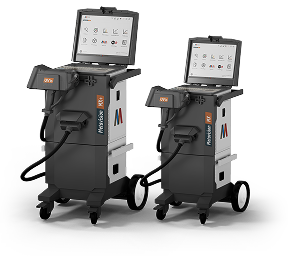
Mobile OES occupies a different position in this comparison. These instruments, exemplified by the Metavision-MX+ from Metal Power Analytical, are not handheld devices in the sense that XRF and LIBS instruments are. They are full-blown spark OES spectrometers in a portable configuration, with units that can be driven, carried or wheeled to the samples, and with analysis eased by using handheld probes, rather than cutting pieces of the sample and carrying them to the laboratory.
When equipped with the UVis Smart probe, the Metavision-MX+ accesses most of the ultraviolet (UV) wavelengths used by stationary laboratory spectrometers, though these spans do not include the emission wavelengths for low nitrogen, oxygen or hydrogen. Carbon is measured at 193.09 nm, nitrogen at 174 nm, phosphorus at 178.29 nm, and sulphur at 180.73 nm. The measurement is not an approximation of laboratory performance. It is the same analytical technique, applied on-site, achieving results that are traceable to the same OES methodology as a stationary instrument in a production laboratory. While results are not on a par with results from a laboratory, the differences are entirely attributable to the absence of a controlled thermal environment, sub-optimal sample preparation in the field, and the difference in steadiness between a handheld probe and the firm base of a stationary laboratory OES.
Like every spark OES analysis, mobile OES requires a small, flat measurement spot prepared on the sample, created on-site with a hand grinder. The trade-off is therefore practical: the Metavision-MX+ takes longer to set up than a handheld XRF scan and is physically larger than a handheld device. For tasks where speed and total portability are the only requirements, and carbon is not part of the question, handheld XRF remains the faster tool. For tasks where elemental coverage, accuracy, precision, and analytical range matter more, mobile OES is by far the most appropriate instrument, providing a perfect balance between mobility and analytical capability.
The 316 vs 316L Problem: The Scenario That Defines the Choice
No single PMI scenario illustrates the distinction between field instruments more clearly than separating a steel grade from its low-carbon L variant. It is also one of the most commercially significant, because mixing 316 and 316L pipe, fittings, or plate in a process plant application can have all manner of undesirable and very direct consequences.
316 stainless steel: carbon content up to 0.08% maximum
316L stainless steel: carbon content restricted to 0.03% maximum
The ‘L’ designation indicates low carbon. The only compositional difference between the two grades is this carbon limit. All other elemental ranges, chromium, nickel, molybdenum, and manganese, are the same. The same L-grade distinction applies to 304 vs 304L, 321 vs 321L, and several other stainless families.
A handheld XRF instrument on a 316L fitting produces a result that shows 16 to 18% chromium, 10 to 14% nickel, and 2 to 3% molybdenum. It cannot produce a carbon reading. The result is consistent with both 316 and 316L. The instrument has identified the alloy family correctly, but cannot answer the question that matters.
A handheld LIBS instrument may produce a carbon number, but the measurement uncertainty at values below 0.08% on an as-found surface is large enough that the result cannot be used to make a definitive grade assignment in most practical field conditions.
The Metavision-MX+ with a UVis Smart probe measures carbon at 193.09 nm on a prepared flat spot and delivers a result that places the material confidently within or outside the 0.03% L-grade limit. The measurement is performed using spark OES, the same technique and the same wavelength as a benchtop laboratory instrument. The result is truly reliable. This single instrument also verifies the full elemental suite, including chromium, nickel, molybdenum, nitrogen, and phosphorus, giving a complete grade confirmation rather than a partial one.
Field Analysis Without Argon: The Arc Probe
The Spark and UVis Smart probes require argon at the point of measurement, which the mobile unit supplies on-site. Several times though, while a user may wish for faster analysis and want to also shed the additional weight of the argon cylinder. These are the scenarios for which the Arc Probe is built: it delivers arc excitation in an environment without argon, and that is its defining advantage. It makes the instrument deployable in field situations where supplying argon to the measurement point is either inconvenient or impractical – and specially where elements like sulphur, phosphorus and nitrogen are not critical. The trade-off follows directly from the physics: without argon, the deep ultraviolet emission lines are not usable, so the Arc Probe cannot analyse nitrogen, sulphur, phosphorus or boron. It can however analyse carbon, even if not well enough to deliver L-grade separation making it a significant and crucial upgrade over an XRF or LIBS instrument. For major and mid-range element verification in the field where argon is not feasible, the Arc Probe is the right choice; for L-grade carbon separation or any light-element work, the UVis Smart probe variants, with argon, are required.
Field Instrument Comparison at a Glance
Parameter |
Stationary OES |
Mobile OES (Metavision-MX+) |
Handheld XRF |
Handheld LIBS |
Sample preparation
|
Hand-ground flat spot | Hand-ground flat spot | None | Prepared surface required |
Argon at the sample
|
Yes | Spark and UVis Smart probes: yes. Arc Probe: no | No | Yes (argon bottle) |
Carbon (316 vs 316L)
|
Yes. To 1 ppm | Yes, with all probes. Lowest limit with UVis Smart probe (to 20 ppm). Arc Probe: higher limit; not to L-grade level. | No | Signal possible; not reliable at the L-grade boundary |
Nitrogen
|
Yes. To 1 ppm | To 40 ppm (UVis Smart probe only) | No | Not reliable |
P and S
|
Yes. To 1 ppm | Yes. To 20 ppm (UVis Smart probe only) | Not reliably, even where attempted | Variable; argon bottle needed |
Major elements
|
Yes. Full suite | Yes. Full suite | Yes. Reliable | Yes. Reliable |
Coating thickness
|
No | No | Yes | No |
Result certifiable
|
Yes. ASTM E415, EN 10001 | No. Reliable and traceable; certification requires a laboratory instrument | No certified equivalent for field use | No steel production standard |
Ideal deployment
|
Production laboratory | Field PMI, scrapyard verification, L-grade separation | Non-ferrous and stainless major-element PMI; coating thickness | Scrap triage, rapid sorting |
Mobile OES light element figures (nitrogen, phosphorus, sulphur and boron to 20 ppm (UVis Smart probe); carbon on all probes at varying limits) apply to the UVis Smart probe. The Arc Probe operates without argon and does not access these light-element lines.
Metavision-MX+ Probe Variants at a Glance
Probe |
Argon needed |
Light elements (C, N, S, P, B) |
Best suited for |
Spark Probe
|
Yes | Carbon only (higher limit than UVis Smart probe; not to L-grade level). Cannot analyse N, S, P or B. | Major and mid-range element verification in the field |
Arc Probe
|
No | Carbon only (higher limit than Spark Probe; not to L-grade level). Cannot analyse N, S, P or B. | Field analysis where argon at the measurement point is impractical. Higher LODs than other probes for general elements. |
UVis Smart Probe
|
Yes | Full light-element suite: C to lowest limit, plus N, S, P and B. All to 20 ppm. | L-grade carbon separation; full light-element analysis on-site; the only probe for N, S, P and B. |
Probe-variant capabilities above reflect points confirmed to date and are subject to final R&D confirmation.
Scrap and Incoming Material: Where Each Instrument Actually Sits
It is worth being precise about where portable instruments are used in the scrap and incoming-material chain, because the common assumption does not match practice. In scrapyards, handheld XRF is the dominant tool for initial purchase decisions, where a buyer needs a fast alloy-family read before committing to a parcel, and for sorting materials in finished-goods yards. Speed and zero sample preparation are what matter at this stage, and handheld XRF delivers both.
Inside the steel plant, the picture is different. Scrap used by the plant is typically inspected by a dedicated laboratory OES set up for exactly this purpose, not by a portable instrument. Incoming gate checks at steel plants almost never rely on mobile or portable spectrometers. Where certified composition matters, the work goes to a stationary laboratory instrument, and Metal Power Analytical has supplied dedicated laboratory OES systems for precisely this scrap-inspection role.
Mobile OES sits between these worlds. Its value is in the verification of specific, high-value, or specification-critical material wherever the sample cannot travel to the laboratory: whether this is in scrapyards for assessing critical materials with a focus on the lighter elements, in finished goods yards for identifying and separating accidental mix-ups, on ships for assessing welds and joints, for quality checking of large finished goods, or for failure analysis in the field. The instruments are complementary across the chain, not interchangeable.
When Field Analysis Is Not Enough
There are analytical questions for which field instruments, including mobile OES, are not the right tool.
When a steel heat requires formal certification to ASTM E415 or EN 10001, that result must come from a stationary production laboratory instrument. Mill test report data, heat certification, and export documentation require traceability to the laboratory method. Mobile OES results are valuable for incoming verification, rejection decisions, and pre-acceptance checks, but no standard permits certification from a mobile instrument; that is the preserve of the laboratory.
When trace element detection at the lowest levels is required, for example, verifying arsenic, antimony, or lead in EAF-grade steel against residual element specifications, or confirming calcium content in deoxidised grades, stationary OES instruments operating under tightly controlled laboratory conditions deliver the analytical floor that field instruments do not reach.
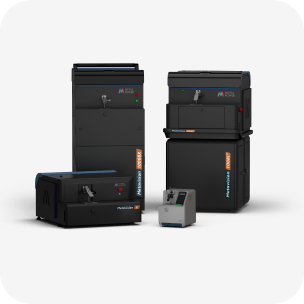
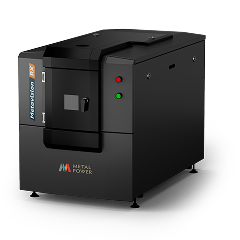
The Metavision-8i addresses the requirements of small and mid-size steel plants, component manufacturers, forging units, and rolling mills where a stationary instrument is justified and field portability is not the requirement. For larger plants and central laboratories, the Metavision-1008i3 and Metavision-10008X deliver the full analytical depth that production certification and R&D applications demand.
Field PMI, grade family and major elements: handheld XRF
Coating thickness: handheld XRF
L-grade carbon separation on-site: Metavision-MX+ with UVis Smart probe (argon required, hand-ground spot)
Analysis where supplying argon at the sample is not feasible: Metavision-MX+ with Arc Probe (major and mid-range elements; still needs a hand-ground spot)
Scrapyard purchase decisions and finished-goods sorting: handheld XRF
Production and certification, including dedicated scrap inspection: stationary OES (Metavision-8i, Metavision-1008i3, Metavision-10008X)
Metavision-MX+ and Metavision-MX: Mobile OES for Field Analysis
The Metavision-MX+ is Metal Power Analytical’s primary mobile OES instrument for field analysis. Available with interchangeable probe heads including the Spark Probe, Arc Probe, UVis Smart Probe, it covers the full range of field PMI tasks from L-grade carbon separation to major-element grade verification where supplying argon at the sample is not practical. Visit the Metavision-MX+ product page for more information.
The Metavision-MX is the field OES instrument for applications where major-element analysis on-site is the primary task and the deep-UV light-element range of the Metavision-MX+ is not required. Both instruments produce results traceable to the same OES methodology as stationary laboratory instruments. Learn more on the Metavision-MX product page.
Closing Thoughts
Field metal analysis is not a single problem with a single solution. The right instrument depends on what the analytical question actually is, and being clear about that question before choosing the instrument saves both time and errors.
For the majority of PMI tasks, handheld XRF is a fast and practical tool, and nothing in this article argues otherwise. Where carbon content is part of the question, particularly at the L-grade boundary where 0.03% and 0.08% are the two sides of a critical decision, mobile OES is the instrument that answers it reliably. Not because it is a better handheld device, but because it uses the same physics as a laboratory instrument, and that is what the measurement requires.
About Author


 On this page

