










 Get In Touch


In the high-accuracy, high-precision world of metal manufacturing, what remains invisible to the naked eye often determines the success of a multi-million-dollar heat. Manufacturers don’t always deal in percentages; more often, the difference between a high-performance alloy and a failed batch lies in trace elements—constituents measured in parts per million (ppm).
Despite their microscopic presence, these elements exert a disproportionate influence on material behaviour. Even trace concentrations of Boron can dramatically shift steel hardenability — too little has no effect, while too much causes embrittlement. In the same way, even trace levels of Oxygen in copper can compromise electrical conductivity and make the material prone to embrittlement during processing.
Defining the Thresholds: What are Detection Limits in Spectrometry?
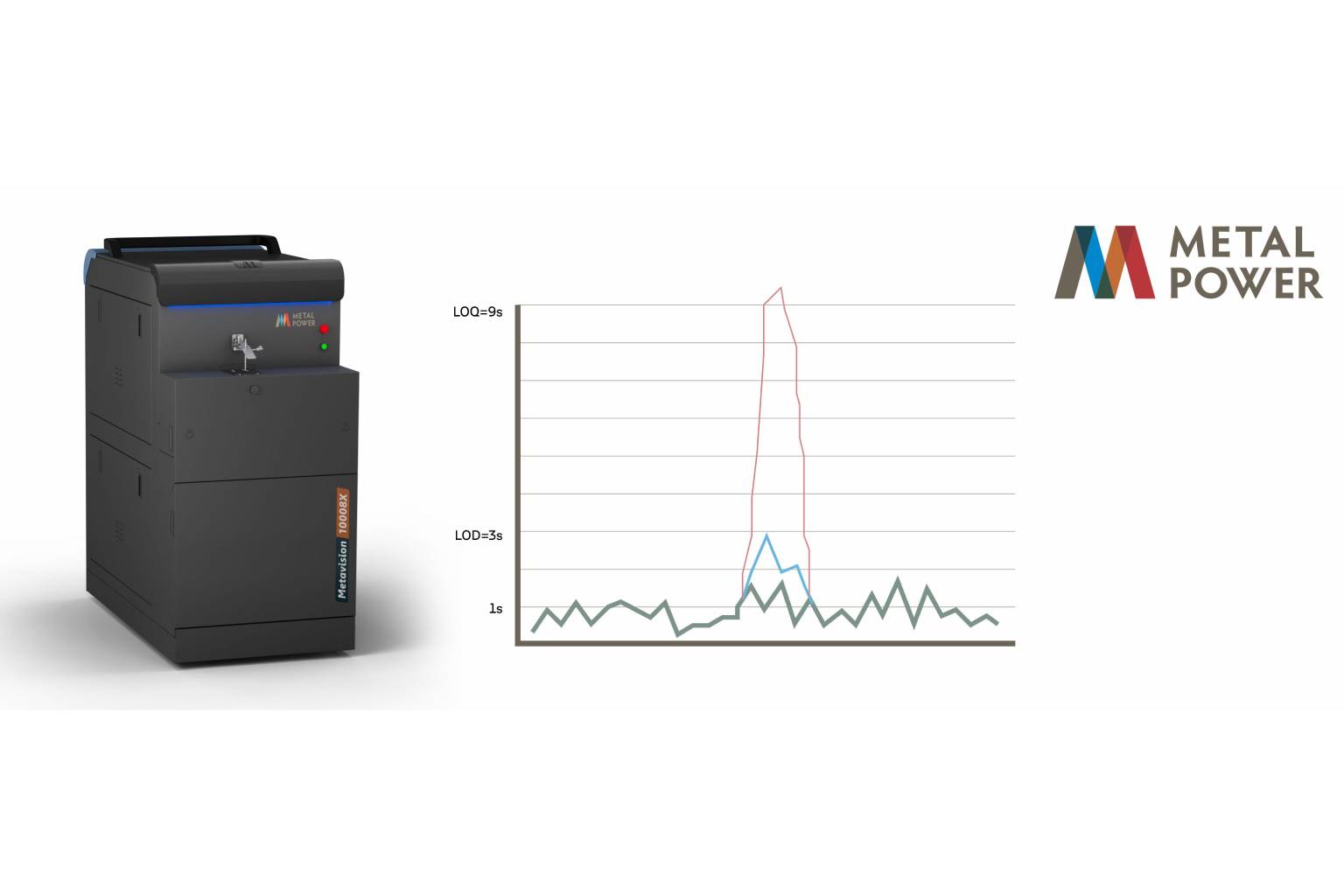
A detection limit is not merely a single number on a spec sheet; it is the mathematical boundary between a meaningful measurement and random instrument “noise.” In a production environment, these limits determine whether your spectrometer can effectively detect, confirm, and quantify a trace element for a certified report.
LOD vs. LOQ: Navigating the Margin of Error
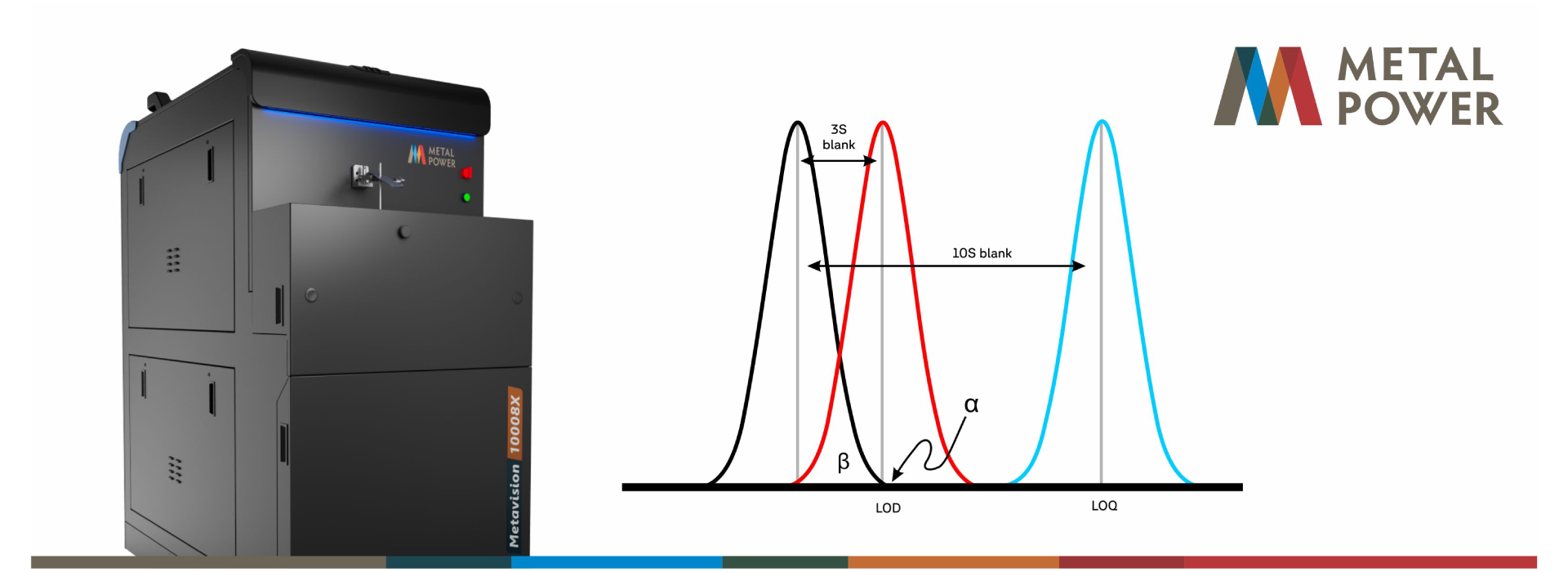
To evaluate an instrument’s true capability, metallurgists must distinguish between the Limit of Detection (LOD) and the Limit of Quantification (LOQ).
Metric |
Definition |
Practical Application |
Limit of Detection (LOD)
|
The lowest concentration at which an element can be identified as “present” (typically 3σ above background). | Qualitative confirmation: “Yes, it is there.” |
Limit of Quantification (LOQ)
|
The lowest concentration measurable with acceptable accuracy (typically 10σ above background). | Quantitative reporting: “I can prove exactly how much is there.” |
For industrial quality control, the LOQ is the metric that matters. It is the threshold that allows a metallurgist to make “stop-go” decisions in the melt shop with absolute analytical confidence.
Why Trace Element Detection is an Operational Necessity
Detection limits are far more than laboratory jargon; they are operational safeguards that protect your bottom line.
1. Ultra-Low Carbon Steel and the Decarburization Challenge
In low-carbon and ultra-low-carbon (ULC) steels, where target carbon levels can fall below 20 ppm, even a 10 ppm deviation can critically affect ductility and weldability. If your spectrometer’s LOQ is not sufficiently low, reliable process control during the final stages of decarburization becomes impossible
2. High-Purity Copper and the Conductivity Standard
In the electrical industry, oxygen content must be controlled to within single-digit ppm levels in Oxygen-Free (OF) copper. Poor detection capability leads to inaccurate readings, resulting in rejected batches, compromised conductivity, and significant energy waste.
3. Tramp Element & Inclusion Control
Elements like Tin (Sn), Antimony (Sb), and Arsenic (As) often enter the melt via scrap. These “tramp elements” cause severe embrittlement if not detected and diluted. Accurate measurement at low concentrations is essential to ensure materials meet global safety standards.
The Science of Clarity: Signal-to-Noise Ratio (SNR)
The ability to “see” trace elements depends entirely on the Signal-to-Noise Ratio (SNR). Think of it like trying to hear a whisper (the element signal) in a crowded room (the background noise).
- A High SNR ensures that the element signal is clearly distinguishable from the electronic and optical background.
- A Low SNR makes it nearly impossible to separate the signal from noise, leading to erratic results.
Improving detection limits is fundamentally an engineering challenge of increasing the “whisper’s” volume or silencing the “room.”
Engineering Precision: What Influences OES Detection Limits?
At Metal Power Analytical, we focus on five engineering pillars to push detection limits to their physical minimum:
- High-Resolution Optics: Superior separation of spectral lines reduces “spectral overlap,” ensuring that the light from one element doesn’t drown out another.
- Advanced CMOS Detectors: Unlike older PMT technology, modern CMOS detectors provide exceptional sensitivity to low-intensity signals, particularly in the far-UV spectrum where Carbon and Nitrogen reside.
- Excitation Stability: A controlled, high-energy spark ensures that atoms are consistently excited, producing a stable light output for the detectors.
- Thermal Stabilisation: Temperature shifts can cause optical components to expand, shifting the “focus.” Thermally stabilised systems keep the signal consistent over long shifts in non-AC environments.
- Smart Calibration Models: Advanced algorithms help filter out background interference, ensuring that the software correctly interprets low-level signals.
Technical Data: Typical Detection Limits for Key Elements
Below is a reference to the detection capabilities required for high-performance metallurgy.
Element |
Importance in Metallurgy |
LOD with Metavision-10008X OES by Metal Power Analytical |
Carbon (C)
|
Determines hardness and weldability. | 1 ppm |
Nitrogen (N)
|
Controls grain size and strength in stainless steels. | 1 ppm |
Sulphur (S)
|
Influences machinability and brittleness. | 1 ppm |
Phosphorus (P)
|
Impacts toughness and cold shortness. | 1 ppm |
Boron (B)
|
Dramatically affects hardenability in low-alloy steels. | 1 ppm |
Laboratory Specs vs. Real-World Performance
It is critical to distinguish between theoretical detection limits in a brochure and practical performance on a production floor. Real-world factors, such as sample preparation, argon purity, and environmental temperature, can influence analytical results.
When selecting an OES, always evaluate detection limits alongside repeatability. A spectrometer that can detect 5 ppm once is a laboratory curiosity; a spectrometer that can detect 5 ppm ten times in a row in a foundry is an industrial asset.
Conclusion: Confidence in Every PPM
Ultimately, detection limits define your analytical confidence. If your instrument cannot reliably quantify trace elements, your production decisions are based on incomplete data, and your compliance risks increase.
In an industry where quality is measured in the margins, knowing your detection limits is the first step toward total process control. By prioritising signal clarity and hardware stability, modern OES systems allow manufacturers to identify and control the smallest variations in composition, supporting consistent quality across every industrial process.
Metal Power Analytical – Expert Consultation
Does your current laboratory setup meet the LOQ requirements for your most sensitive grades? Reach out to our experts at Metal Power Analytical at marketing@metalpower.net or fill out the ‘Get in Touch’ form for a detailed gap analysis of your testing capabilities and to learn more about the benefits of our Metavision stationary Spark OES series.
About Author


 On this page

