











 Get In Touch



Across modern manufacturing industries, the chemical composition of metals directly determines strength, durability, weldability, corrosion resistance and safety. Whether producing steel for automotive components, casting iron parts in foundries or manufacturing high-performance alloys for aerospace applications, verifying the elemental composition of metals is a critical step in quality control and regulatory compliance.
Optical Emission Spectroscopy (OES) has become one of the most widely used analytical techniques for metal composition analysis. By enabling rapid and accurate determination of elemental composition, OES supports critical material decisions in laboratories, production environments and field inspection scenarios.
What is Optical Emission Spectroscopy?
Optical Emission Spectroscopy is an analytical technique used to determine the chemical composition of metallic materials.
The principle behind OES is based on atomic emission. When energy is applied to a metal sample, atoms at the surface become excited. As these atoms return to their ground state, they emit light at wavelengths that are characteristic of each element.
These wavelengths act as unique ‘Spectral Signatures’ for elements such as:
- Carbon
- Sulphur
- Phosphorus
- Nitrogen
- Chromium
- Nickel
- Manganese
- Silicon
- Molybdenum
By measuring the intensity of this emitted light, an optical emission spectrometer can determine which elements are present in the sample and their concentration.
This ability to simultaneously analyse dozens of elements — including trace impurities at parts-per-million levels — makes OES one of the most powerful methods for metal composition analysis.
How an Optical Emission Spectrometer Works
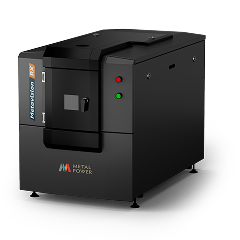
In industrial metal testing, spark or arc excitation is commonly used to generate the emission spectrum.
The analysis process typically involves the following steps:
1. Sample placement
The metal sample is placed on the spark stand of the spectrometer after surface preparation.
2. Electrical discharge
A controlled spark or arc is generated between the electrode and the metal sample. This produces a plasma that excites atoms at the sample surface.
3. Emission of characteristic wavelengths
Excited atoms emit light at specific wavelengths as they return to their ground energy state.
4. Spectral separation
The spectrometer’s optical system separates the emitted light into individual wavelengths.
5. Elemental quantification
High-resolution detectors measure the intensity of each wavelength and convert this data into quantitative elemental concentrations.
This entire process typically takes only a few seconds, making OES suitable for real-time industrial metal analysis.
Why OES Is Widely Used for Metal Analysis
Optical Emission Spectroscopy offers several advantages for analysing metals and alloys.
Simultaneous multi-element analysis
OES can analyse dozens of elements in a single measurement, including alloying elements and trace impurities.
Accurate detection of light elements
Elements such as carbon, sulphur and phosphorus strongly influence steel properties but are difficult to measure using many other analytical techniques. Spark OES can detect these elements reliably.
Rapid analysis
Results are generated within seconds, allowing engineers to make immediate decisions in production environments.
High analytical accuracy
Well-designed spectrometers maintain stable excitation conditions and high spectral resolution, enabling reliable composition analysis across different alloy systems.
These characteristics make OES one of the most trusted technologies for steel composition analysis, alloy verification, and grade confirmation across ferrous and non-ferrous materials.
Applications of Optical Emission Spectroscopy in Industry
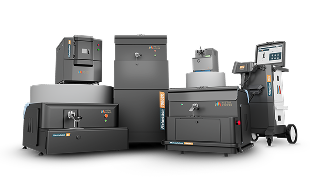
Optical emission spectrometers are widely used across the metal manufacturing supply chain. Listed below are some of the major industries (among a multitude of others) that depend on spectrometers.
Steel production and foundries
Spectrometers are used to monitor melt chemistry during steelmaking and casting operations. Accurate chemical analysis ensures the correct alloy composition before metal is poured or cast.
Automotive manufacturing
Automotive components require strict control over alloy composition to ensure strength, durability and safety.
Aerospace materials testing
High-performance aerospace alloys must meet precise chemical specifications to ensure structural integrity under extreme conditions.
Metal fabrication and inspection
OES enables rapid metal grade verification for incoming materials, preventing incorrect alloys from entering production.
Scrap metal recycling
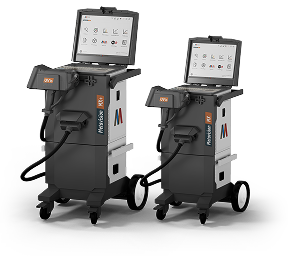
Portable, mobile and hand-held spectrometers help identify and segregate scrap metals based on elemental composition, improving recycling efficiency, reducing cross-contamination risk, and maximising material recovery value.
Factors That Influence Accuracy in OES Analysis
Although the analytical principle of OES is well established, the reliability of results depends on several factors.
Stable excitation source
The electrical discharge used for spark analysis must remain consistent to ensure repeatable measurements.
Optical stability
High-resolution optics are required to clearly separate emission lines from different elements.
Thermal control
Temperature stability within the optical system helps maintain wavelength accuracy.
Proper sample preparation
Removing oxide layers and surface contamination ensures that the analysis reflects the true composition of the metal.
When these parameters are carefully controlled, Optical Emission Spectrometer (OES) instruments can routinely achieve measurement uncertainties below 0.01% for major alloying elements — making them reliable tools for tight compositional specifications.
Why Optical Emission Spectroscopy Remains the Industry Standard
Despite the availability of alternative technologies such as X-ray fluorescence, OES remains one of the most widely adopted methods for metal composition analysis.
The technology combines several advantages that are critical in industrial environments:
- rapid analysis times
- multi-element detection
- accurate measurement of light elements
- suitability for production environments
- ability to detect carbon, sulphur, and nitrogen — elements invisible to XRF
These characteristics make OES a benchmark analytical method for quality control in steel plants, foundries and alloy manufacturing industries.
Conclusion
In industries where material performance depends on precise chemical composition, accurate elemental analysis is essential.
Optical Emission Spectroscopy provides a reliable and efficient method for determining the composition of metals and alloys. By combining rapid analysis with high analytical accuracy, OES allows manufacturers, quality inspectors, and metallurgists to make confident decisions regarding material quality and compliance.
As manufacturing technologies continue to evolve and quality requirements become more demanding, the role of spectrometric analysis in industrial environments will only become more important.
About Author


 On this page

