









 Nous contacter


A turbine bearing seizes three days before its scheduled maintenance window. A locomotive gearbox strips its teeth mid-route, stranding every wagon behind it. A ship’s engine room reports an unexplained vibration on a mid-ocean crossing, with the nearest port still four days away. In every one of these situations, the equipment had already been signalling the problem, days or weeks earlier, through microscopic wear particles suspended in its own lubricating oil.
Whether the person facing that failure is a Maintenance Manager responsible for a production line’s uptime, a Plant Head answerable for an entire facility’s output, an Engineer troubleshooting a specific gearbox, or a Ship’s Captain who cannot simply pull into the nearest port, the underlying problem is the same: by the time a failure is audible or visible, the cost of addressing it has already gone up substantially. The oil itself holds the earlier warning; timely and effective analysis of that oil could therefore have prevented the failure and fallout entirely.
The Industry Challenge: Catching Wear Before It Becomes a Failure
Unplanned downtime is expensive in every industry that depends on rotating or reciprocating machinery. A power plant losing a turbine unexpectedly loses generation revenue for every hour it is offline. A ship with an engine failure at sea faces costs far beyond the repair itself: delayed cargo, missed schedules, and potentially a vessel dead in the water. A manufacturing plant with a compressor or gearbox failure loses production time that a scheduled maintenance window would never have cost it.
The industry-wide challenge is the same regardless of sector: how does a maintenance team know a component is wearing abnormally before that wear becomes a failure, without waiting for vibration, noise, or heat to make the problem obvious. Wear metal analysis in used oil answers exactly this question, and it does so earlier than most other condition monitoring methods, because the metal particles appear in the oil from the very first stages of abnormal wear.
Root Cause: Why Wear Metals Appear in Oil in the First Place
Every metal or metal alloy component in a piece of rotating or reciprocating machinery, bearings, gears, pistons, cylinder liners, shafts, seals, is in constant contact with another moving surface. That contact generates wear, and wear generates particles small enough to be carried away and suspended in the lubricating oil or hydraulic fluid circulating through the system.
The specific elements found in the oil map directly back to the components producing them. Iron, for example, may indicate wear in gears, shafts, and cylinder liners. Copper and lead may point to bearing wear, particularly since babbitt and bronze bearing materials are rich in both. Chromium typically suggests wear in chrome-plated components or certain ring and liner combinations. Similarly, aluminium generally indicates piston wear in reciprocating engines and so on.
None of this is a single-reading exercise. A single wear metal concentration on its own tells you very little; a rising trend across successive oil samples tells you a great deal. This is the basis for trend-based condition monitoring: the same equipment, sampled at the specific intervals and tracked over time, with wear metal concentrations plotted against the machine’s operating hours or distance travelled.
The Technology: Rotating Disc Electrode Optical Emission Spectrometry
The most efficient and commonly used technique for measuring wear metal concentration in used oil is Rotating Disc Electrode Optical Emission Spectrometry (RDE-OES). It shares its underlying physics with the spark OES used for solid metal analysis in steel and foundry laboratories, but adapts the excitation system, power source and applications suite to cater specifically to liquid samples.
In an RDE-OES, a rotating graphite disc electrode dips into the oil sample, carrying a thin film of oil up into the gap between the disc and a stationary counter electrode. A high-voltage is applied across that gap, creating a plasma. The excitation vaporises the oil film and excites the metal particles suspended in it within the plasma. The atoms of each element now emit light at wavelengths characteristic of their own atomic structure, exactly as in solid-sample OES. A diffraction grating separates that light by wavelength, and CMOS detectors measure the intensity of each spectral line, which correlates to the concentration of that element in the sample.
The rotating electrode is what makes this technique suited to oil in the first place. A stationary electrode would burn through the same small patch of sample almost immediately; the constant rotation continuously presents a fresh film of oil to the spark, allowing a stable, sustained measurement across a full analytical cycle.
This measurement is performed according to ASTM D6595, the standard test method for Determination of Wear Metals and Contaminants in Used Lubricating Oils or Used Hydraulic Fluids by Rotating Disc Electrode Atomic Emission Spectrometry.
The Solution: Reading Wear, Contamination, and Additive Depletion Together
Not every element in an oil analysis report tells the same kind of story. Broadly, the elements fall into three categories, and a competent oil analysis programme reads all three together rather than looking at any one in isolation.
Wear metals are the elements generated by the mechanical wear of internal components: iron, chromium, copper, tin, lead, aluminium, and nickel are the most common. Rising concentrations of these, particularly against a stable baseline for that specific machine, are the earliest indicator of abnormal wear.
Contaminants are elements that should not be present at all, or should only be present at trace levels, and whose presence indicates an external source has entered the oil. Silicon is the most-watched contaminant element, since it is the elemental signature of dust and dirt ingress, typically through a failed seal, a damaged breather, or a compromised filter. Sodium and potassium can indicate coolant leaks in engines and gearboxes cooled by water or glycol-based fluids.
Additive elements are deliberately present in fresh oil as part of its formulated additive package, and their concentration is expected to hold steady or decline gradually over the oil’s service life, not rise. Calcium, zinc, phosphorus, and boron are common additive elements, used respectively in detergents, anti-wear compounds, and extreme pressure additives. A falling additive concentration signals additive depletion, meaning the oil’s protective chemistry is being consumed and the oil may need to be changed or topped up sooner than the standard interval suggests.
Reading these three categories together is what separates a genuine condition monitoring programme from a simple contamination check. A single elevated iron reading with everything else stable might just be a one-off sampling artefact. The same elevated iron reading alongside falling zinc and rising silicon tells a much more specific story: abnormal wear, compounded by depleting anti-wear protection, likely driven by an ingress problem letting abrasive contamination into the system.
A recurring question for maintenance teams is whether to send oil samples to an external commercial laboratory or bring this analysis in-house. On-site oil analysis means the latter: testing the oil at the same location where the equipment itself runs or is serviced, instead of shipping a sample away and waiting for results. An external laboratory typically takes several days to return a result. By the time that result comes back, the equipment may already have run for another shift, another voyage, or another flight. On-site analysis compresses that wait time from days to minutes, so a decision, keep running, schedule a repair, or ground the equipment, can be made on current data instead of a result that is already a week old.
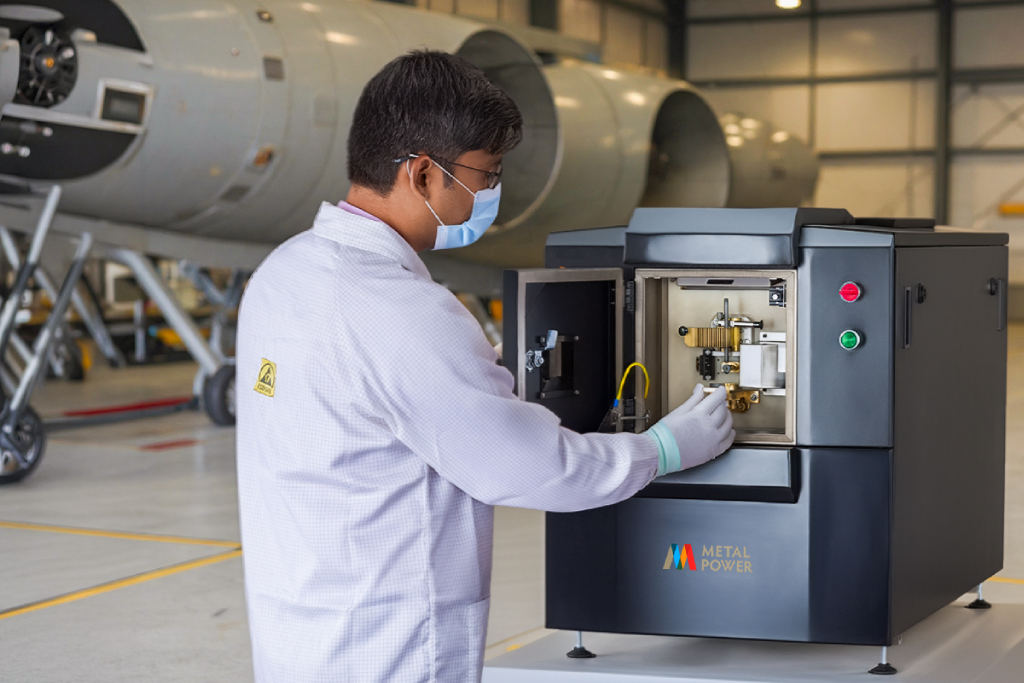
This matters most in exactly the locations where sending a sample offsite is slow or impractical: an aircraft maintenance repair shop floor, where turnaround between flights is measured in hours; a railyard servicing locomotive fleets on rotation; a ship’s own engine room, where a sample sent ashore may not return before the vessel has sailed again; and a power plant, where catching a turbine or generator bearing issue early avoids an unplanned outage. This is a different kind of on-site than the field-portable positioning used elsewhere in the Metal Power Analytical range. A benchtop oil spectrometer is not built to be carried into a remote or rugged field environment, the way a handheld instrument is. On-site here simply means installed at the customer’s own facility, so oil analysis becomes a routine, in-house capability rather than an outsourced, multi-day process.
The Business Value: What Catching Wear Early Is Actually Worth
The value of wear metal analysis is best measured against the cost of the failure it prevents and, of course, of the implications of such a failure in terms of time, safety and human as well as environmental costs. A bearing replaced during a scheduled maintenance window costs a fraction of what the same bearing costs after it seizes and damages the shaft, the housing, or the components around it. An oil change brought forward by two weeks because additive depletion showed up in a routine sample costs far less than the same engine or gearbox running on unprotected oil until the next scheduled service.
The same logic extends to equipment availability. A turbine, a locomotive, or a vessel taken offline for a planned repair based on an early wear signal returns to service on a predictable schedule. The same equipment failing unexpectedly returns to service on no schedule at all, at a cost that includes not just the repair but everything the business could not do while it was down. Safety considerations also play a major role, particularly in applications such as mass transit, transportation, aviation and the like.
The Product: What the Metavision-RX Measures
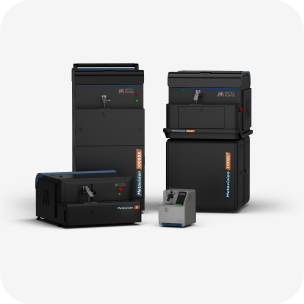
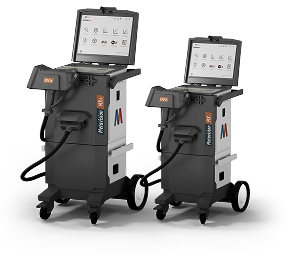
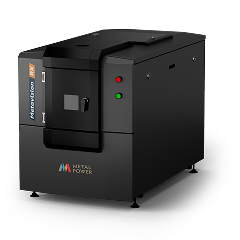
A modern oil analyser, such as the Metavision-RX, is built around a defined analytical programme: a confirmed list of elements, each with its own calibrated wavelength and detection range, developed and validated against ASTM D6595.
The Metavision-RX’s standard analytical programme covers 21 elements as part of its base configuration: silver, aluminium, boron, barium, calcium, cadmium, chromium, copper, iron, magnesium, manganese, molybdenum, sodium, nickel, phosphorus, lead, silicon, tin, titanium, vanadium, and zinc. Each of these is quantifiable from 0 to 200 ppm as standard, with the upper limit extendable to 1000 ppm, and for elements such as barium, calcium, magnesium, sodium, phosphorus, and zinc, extended up to 6000 ppm. These limits can be extended even further depending on the availability of certified reference materials for calibration.
A further 12 elements, arsenic, beryllium, bismuth, cerium, cobalt, indium, potassium, lithium, antimony, strontium, tungsten, and zirconium, are available as an add-on option for laboratories with a specific requirement beyond the standard wear metal and additive suite, for example, military or aviation oil analysis programmes that track a wider elemental fingerprint. All these elements are quantifiable in the range of 0 to 200 ppm, while potassium and strontium have an extended quantification range of up to 1000 ppm.
Together, this gives the Metavision-RX a total capability of 33 elements across both packs. The standard pack and the add-on pack serve different purposes: the standard 21 elements cover the wear metals and additive elements that every used oil analysis programme needs as a baseline, while the add-on 12 elements serve laboratories with a specific, defined additional requirement, not a general-purpose upgrade.
Conclusion
Wear metal analysis works because it gives a maintenance team the same information the equipment already has about its own condition, days or weeks before that information becomes a failure. Whether the equipment in question is a turbine, a locomotive gearbox, or a ship’s engine, and whether the person acting on that data is a Maintenance Manager, a Plant Head, or a Ship’s Captain, the underlying value is the same: a decision made on current data, on a predictable schedule, instead of a decision forced by an unplanned failure.
About Author


 On this page

